Let's Shape The Future Of trade
Where innovative and high-potential business opportunities await discovery, we are your partners.

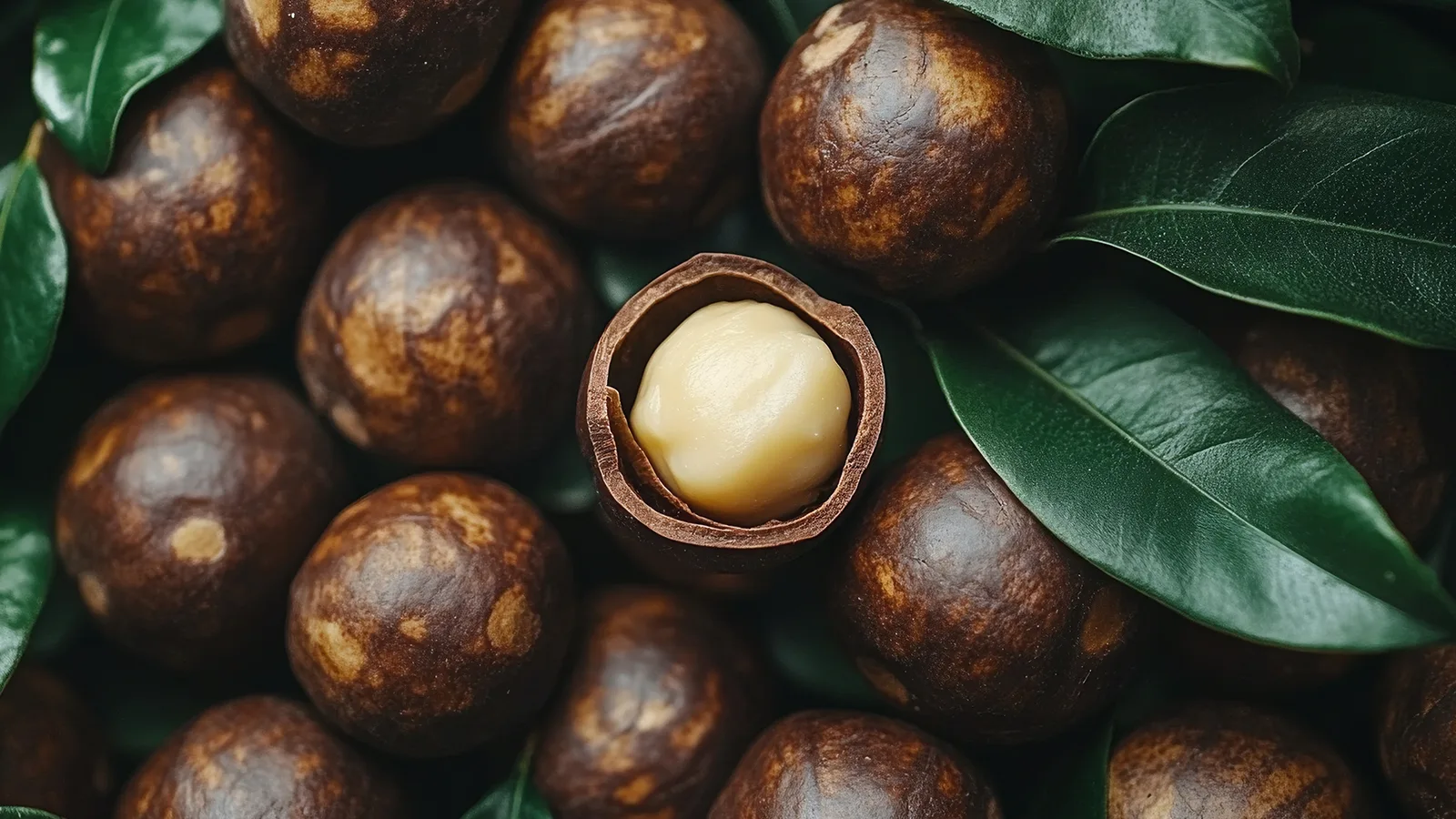
The shea tree (Vitellaria paradoxa) takes up to 50 years to reach full maturity, yet when it does, it provides communities with food, medicine, skincare, timber, and income all at once.
In the dusty savannahs of West and Central Africa, a slow-growing tree produces one of nature’s most generous gifts. The shea tree (Vitellaria paradoxa) takes up to 50 years to reach full maturity, yet when it does, it provides communities with food, medicine, skincare, timber, and income all at once. For centuries it has been known across the Sahel as the “women’s gold,” because it is almost exclusively women who harvest, process, and trade it.
The world has recently caught up.
The shea tree is not farmed in the conventional sense — it grows wild across a 5,400-kilometre belt stretching from Senegal in the west to Uganda and Ethiopia in the east, a region known as the Shea Belt. Its fruit looks like a small plum, and inside that fruit sits the nut from which nearly everything of value is extracted.
The most famous extraction. Shea butter is made by cracking the nut, boiling the kernels, grinding them into a paste, and churning that paste until the fat separates — a process almost unchanged for thousands of years. The result is a rich, ivory-coloured fat with an unusually high content of unsaturated fatty acids, particularly oleic and stearic acid, that gives it a melting point close to body temperature. It dissolves on skin without leaving a greasy film.
Cosmetic-grade shea butter is the form most people encounter in moisturisers, lip balms, hair conditioners, and sunscreens. Its triterpene content gives it natural anti-inflammatory properties; its cinnamic acid esters provide a modest UV-filtering effect. Food-grade shea butter, less well known in the West, is used across West Africa as a cooking fat and flavouring agent, and internationally as a cocoa butter equivalent in chocolate manufacturing.
When shea kernels are cold-pressed rather than boiled and churned, the result is shea oil — a lighter, more fluid extract. It retains the fatty acid profile of butter but is easier to blend into serums, leave-in hair treatments, and massage oils. Because cold-pressing avoids heat, it preserves more of the naturally occurring vitamins, particularly vitamin E (tocopherol), which acts as an antioxidant and extends shelf life.
Industrial processing of shea kernels produces two fractionated fats. Shea stearin is the solid fraction — high in stearic acid, hard at room temperature, and widely used by the food industry as a vegetable fat in confectionery, biscuits, and margarine. Shea olein is the liquid fraction — softer, with a higher oleic acid content — used in cooking oils and cosmetic formulations. The two fractions together account for the majority of shea’s global trade by volume.
After the fat is extracted, the residual meal — called shea cake — is rich in protein and carbohydrate. Across the Sahel it is fed to livestock, but it has growing potential as an ingredient in human food products and animal feed for aquaculture. Research into making shea cake suitable for wider food use is ongoing, particularly in Ghana and Burkina Faso.
Often overlooked, the pulp surrounding the shea nut is sweet and edible, eaten fresh in season or fermented into a mildly alcoholic drink. It is high in vitamin C and sugars. In lean seasons it serves as a significant source of nutrition for communities in the Shea Belt, though it has not yet been commercialised at scale.
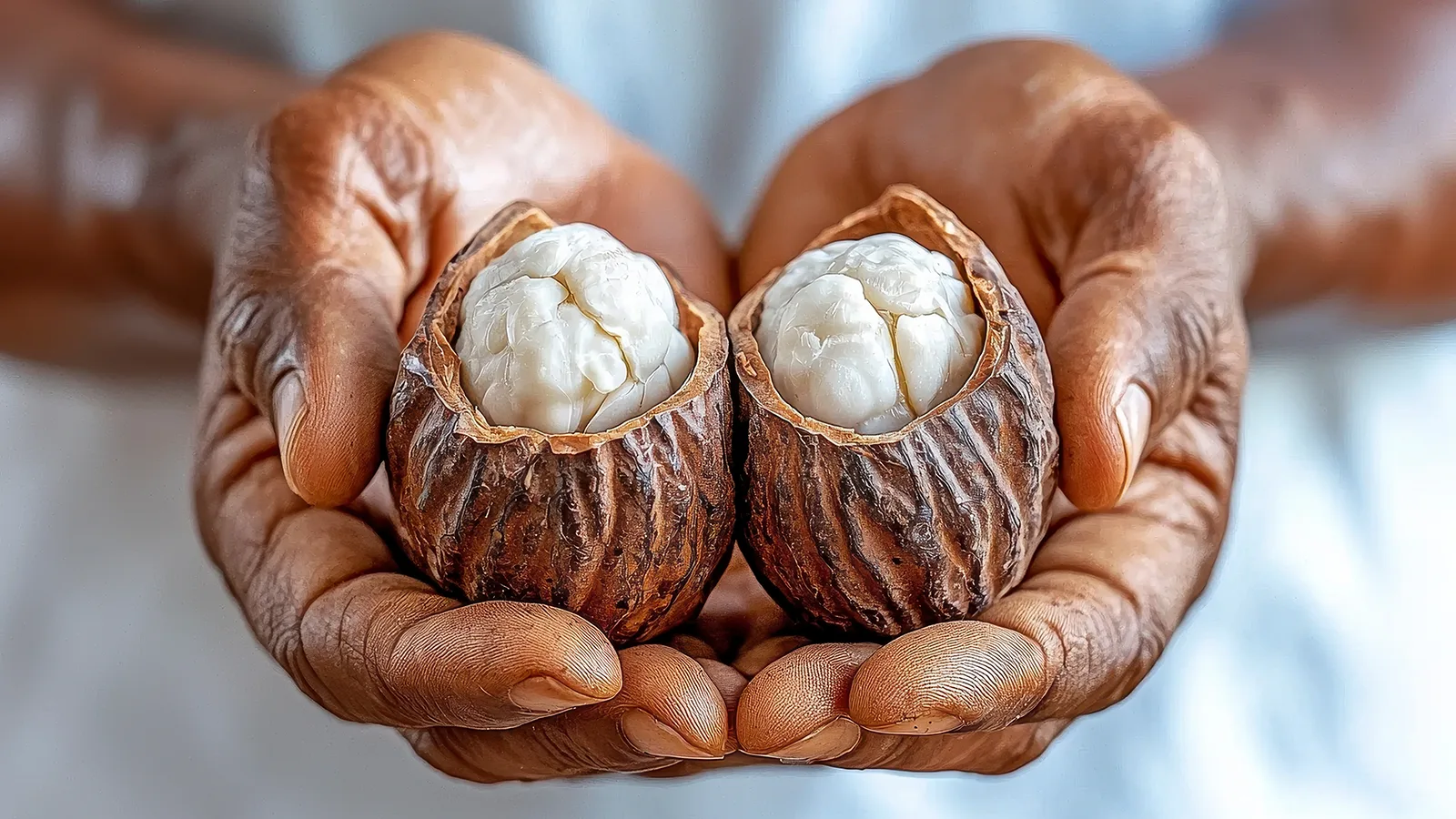
The timber of the shea tree is dense and resistant to termites, used in construction and furniture making. Its bark, roots, and leaves feature in traditional medicine across the region — preparations made from them are used to treat fevers, skin conditions, rheumatism, and digestive ailments. The smoke of burning shea wood is used in West Africa to preserve and flavour the dried fish known as banda.
Quality in shea is primarily a function of latitude, soil, rainfall, and processing method. Not all shea is equal.
Widely considered to produce the finest shea in the world. Burkina Faso sits at the heart of the Shea Belt, with soils and a dry climate that concentrate the fat content of the nuts. The country exports more shea than any other nation, and its kernels command a premium on international markets. Around the towns of Bobo-Dioulasso, Dédougou, and Nouna, long-established cooperatives of shea women have refined traditional processing into a consistent, high-quality product.
Ghana’s shea industry is the best organised on the continent. The country has a robust system of women’s cooperatives, most concentrated in the Northern, Upper East, and Upper West regions — particularly around Tamale and Bolgatanga. Ghanaian shea is known for clean processing and reliable moisture content, making it a favourite of cosmetic manufacturers who need consistent specifications. Several international fair-trade certifications operate in Ghana, adding traceability.
Mali produces shea across a wide band of its southern territory, and its unrefined shea butter has a particular golden-yellow tint and nutty aroma prized by those who prefer minimally processed products. The region around Sikasso is the most productive.
Nigeria is the world’s largest producer of shea nuts by volume, though much of its output is exported as raw kernels rather than processed butter, limiting the value retained locally. Shea is harvested across the states of Kebbi, Kwara, Niger, Kogi, and Benue. Efforts are underway to expand domestic processing capacity.
East African shea (Vitellaria paradoxa subsp. nilotica) is a distinct variety found in northern Uganda, South Sudan, and the Democratic Republic of Congo. It has a softer texture and higher oleic acid content than West African shea, making it exceptionally moisturising. Ugandan shea — sometimes sold as “nilotica shea” — fetches among the highest prices in premium cosmetics and is sought by formulators who want an extra-emollient product. The West Nile region of Uganda, around Arua, is the centre of production.
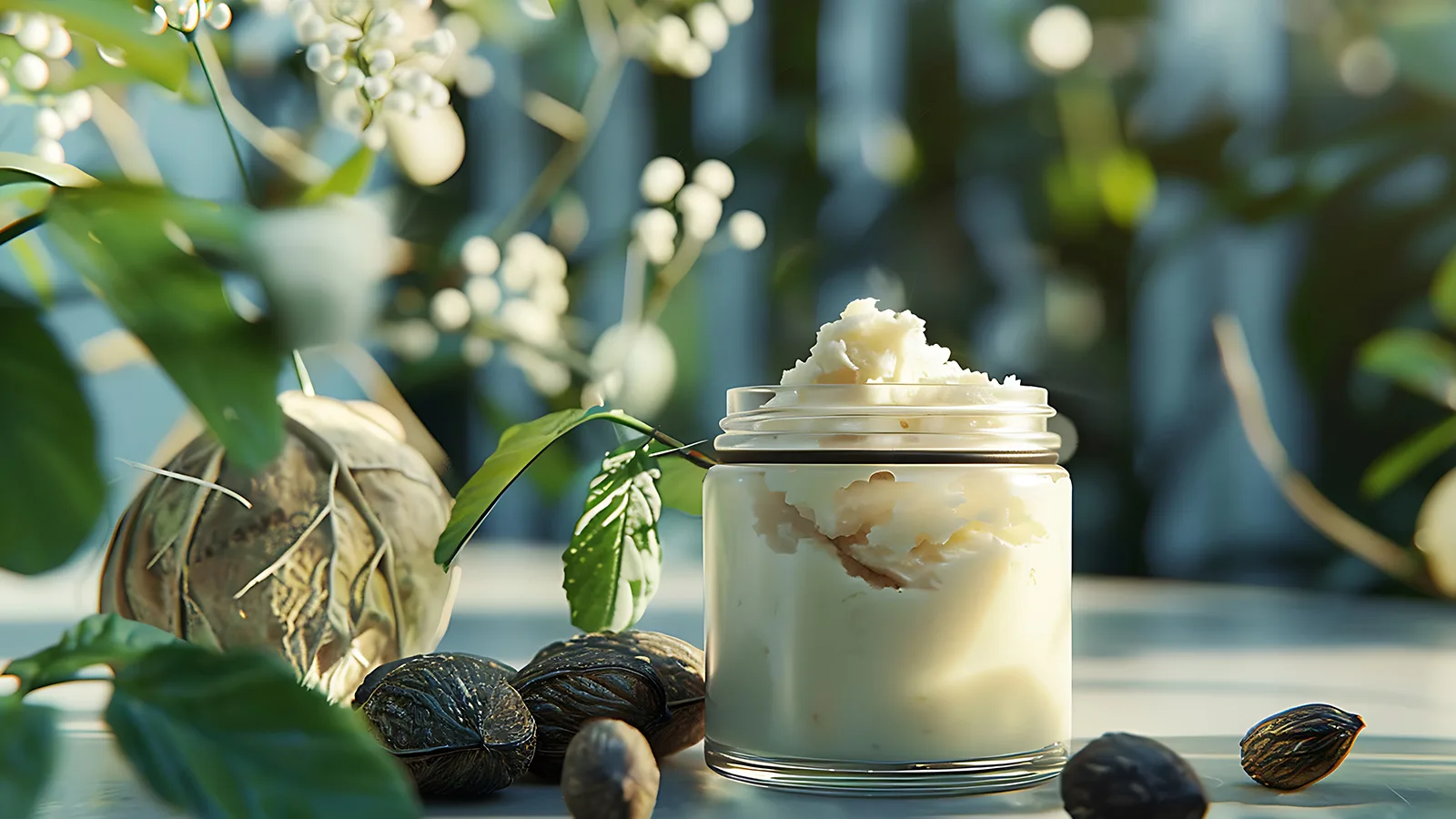
Whether you are buying for personal use or for formulation, a few markers distinguish good shea from poor:
Unrefined shea butter made from fresh nuts is ivory to pale yellow. Greyish or very dark butter often indicates aged or improperly stored nuts. Nilotica shea is naturally creamier and paler.
Good unrefined shea has a mild, earthy, slightly nutty aroma. A strong rancid or smoky smell indicates poor storage or processing with direct fire contact.
High-quality shea melts cleanly and quickly at skin temperature. Gritty or grainy texture usually means the butter was processed at too-high temperatures and has re-crystallised poorly.
The Global Shea Alliance classifies shea butter from Grade A (highest quality, suitable for cosmetics) through to Grade E (heavily refined, bleached). Grade A unrefined is the gold standard for skin and hair use.
It is impossible to write about shea honestly without writing about the women who produce it. Across the Shea Belt, shea collection and processing is almost entirely female work, often passed down through generations. For rural women with limited access to formal employment, shea is frequently their primary source of income.
The work is hard. Nuts are gathered from the ground by hand during the harvest season, typically June to September, then boiled, sun-dried, cracked, and processed over open fires. A kilogram of finished butter can take several hours to produce.
International demand has transformed the economics of shea in ways that are broadly positive but not without complication. Certification schemes, cooperatives, and fair-trade partnerships have raised prices and improved working conditions in many communities. But rapid commercialisation has also created pressure on supply chains, with some processors bypassing women’s groups to source cheaper raw kernels, undercutting the cooperatives that protect workers.
The best shea; ethically and in quality:- almost always comes with a traceable supply chain leading back to a named cooperative or producer group.
The shea tree cannot be rushed. Planted from seed, it will not produce its first nuts for fifteen to twenty years, and will not reach peak yield for fifty. It is not cultivated but inherited — trees are passed from mother to daughter, tended rather than farmed.
Climate change threatens this inheritance. Changing rainfall patterns, increased drought, and land clearance for agriculture are reducing shea tree density across the Sahel. Some studies suggest that without intervention, commercially viable shea populations could decline significantly by mid-century.
The irony is that shea’s growing global popularity is also its best argument for conservation. A tree worth protecting financially is a tree that gets protected. The more the world understands what shea gives — butter, oil, food, medicine, income, shade — the stronger the case for keeping the trees standing.
The Global Shea Alliance, headquartered in Accra, Ghana, is the leading body coordinating sustainable shea production across producing and consuming countries.